Repetition in Advertising: How to Use Frequency to Boost ...
TL;DR
- Explains the psychology behind the Mere Exposure Effect in marketing
- Distinguishes between strategic brand permeation and consumer harassment
- Addresses overcoming banner blindness through optimized ad frequency
- Details how repetition builds trust and long-term brand salience
- Provides strategies for frequency management in a privacy-first world
Repetition in Advertising: How to Use Frequency to Boost ROI (Without Being Annoying)
Repetition is the single most misunderstood tool in the marketer's shed.
Let's be real: most brands treat repetition like a blunt instrument. They find a banner ad that works (sort of) and then bludgeon the user with it until they either surrender their credit card or install an ad blocker. That isn't strategy. That’s harassment.
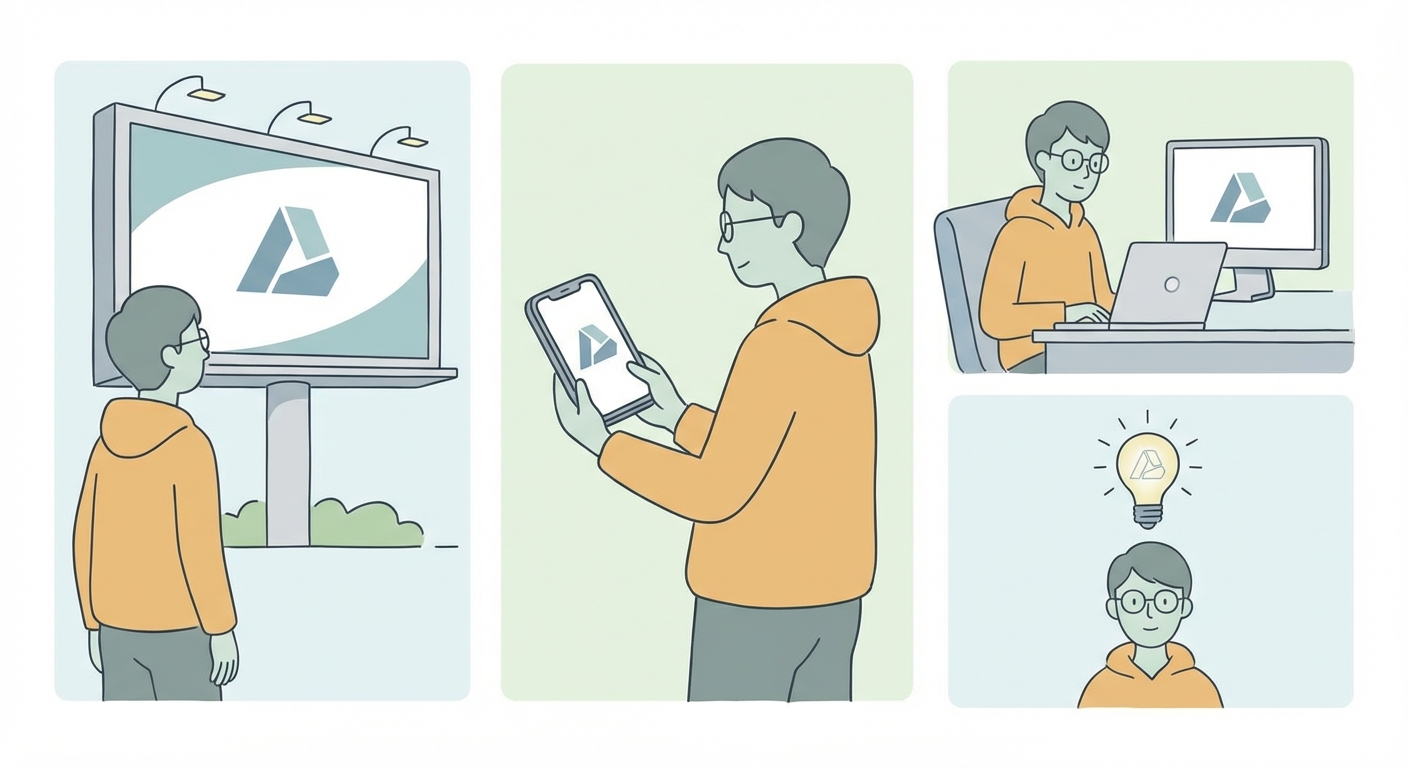
Smart repetition isn't about brute force; it’s about psychological permeation. It’s the subtle art of moving a brand from "unknown noise" to "familiar choice" by leveraging the brain's love for patterns. The goal is to walk the razor's edge between being memorable and being a total nuisance.
Here’s the paradox of modern marketing: everyone claims to hate repetitive ads. We roll our eyes when the same 15-second pre-roll interrupts our YouTube video for the third time in an hour. We complain about being "stalked" by that pair of sneakers we looked at once.
But the data doesn't lie. We overwhelmingly buy from brands we recognize. We trust names we’ve heard before.
The problem facing us in 2026 is "Banner Blindness 2.0." Consumers have evolved. Their brains now run a sophisticated, subconscious ad-blocker that filters out anything resembling a sales pitch before it even reaches conscious thought. If you show an ad once, you’re invisible. If you show it too often, you’re blocked.
The winning strategy lies in the middle. You have to break that subconscious filter without triggering the "annoyance reflex." We need to stop viewing frequency as a metric of volume and start viewing it as a metric of trust.
Let’s dissect why this works, where the new benchmarks are, and how to manage frequency in a privacy-first world without driving your audience crazy.
The Psychology: Why Does Repetition Work?
Your brain is lazy.
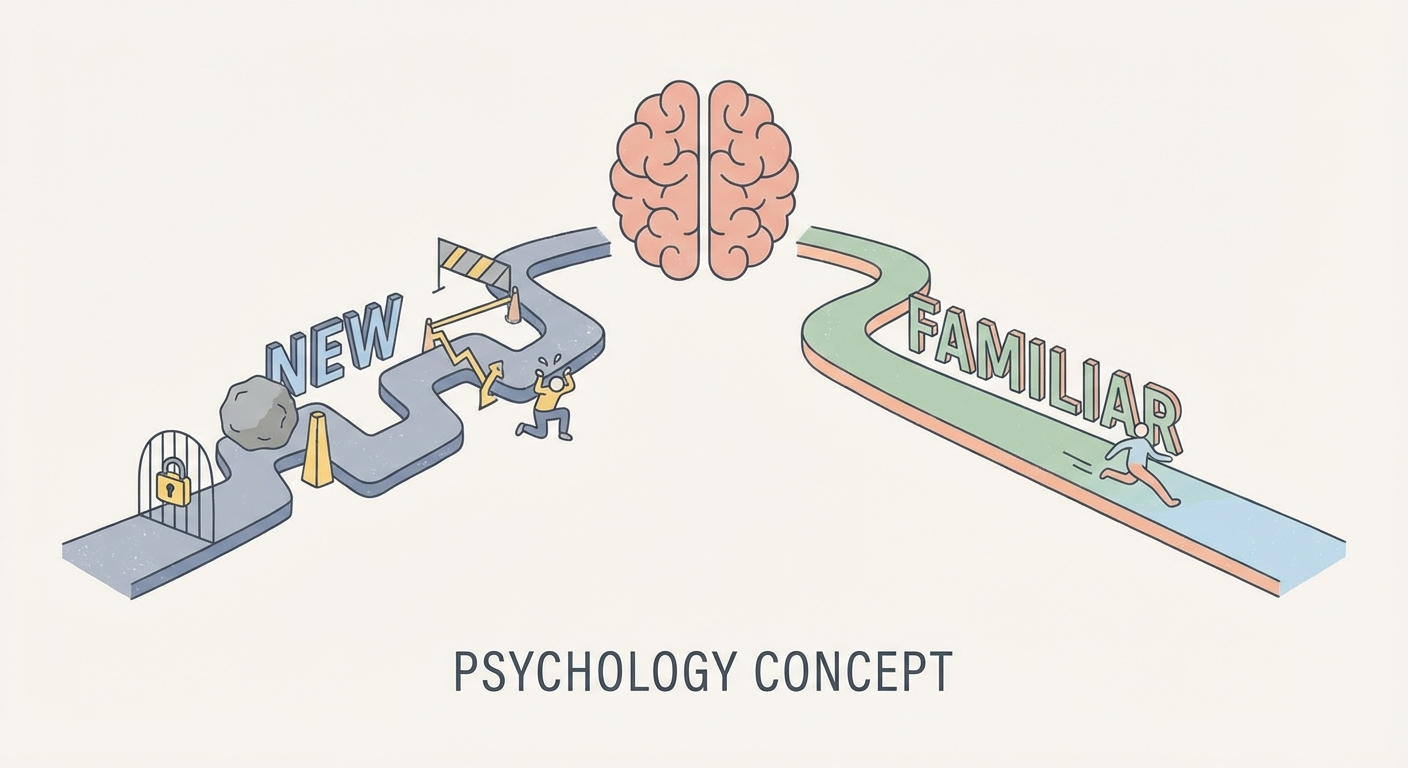
That isn’t an insult; it’s an evolutionary survival mechanism. Processing new information burns massive amounts of energy (glucose). Processing familiar information? That's cheap and easy. When your brain encounters a stimulus it has seen before, it sighs in relief. "I know this. This is safe. I don't need to analyze it for threats."
Psychologists call this the Mere Exposure Effect. Discovered by Robert Zajonc, it dictates that familiarity breeds affection, not contempt—at least initially. The more you are exposed to something, the more you tend to like it, simply because it becomes easier for your brain to process.
It's why that pop song you hated on the first listen becomes a "banger" after the tenth time you hear it on the radio. You didn't develop better taste; your brain just got used to the pattern.
In advertising, repetition moves a brand from the volatile, overcrowded space of short-term memory into the fortress of long-term memory. It creates "brand salience." Salience is why you ask for a Coke instead of "brown carbonated sugar water." It’s why you Google "Nike" instead of "running shoes."
However, the old "Rule of 7"—that 1930s movie studio axiom stating a prospect needs to see an ad seven times to take action—is dead. Or rather, it has been inflated by attention inflation. In the fragmented, multi-screen chaos of 2026, where attention spans are measured in milliseconds, the threshold for initial recognition has climbed. You might need 10 to 15 touchpoints just to achieve the same cognitive impact that 7 provided in the TV era.
Reach vs. Frequency: You Can't Have Both
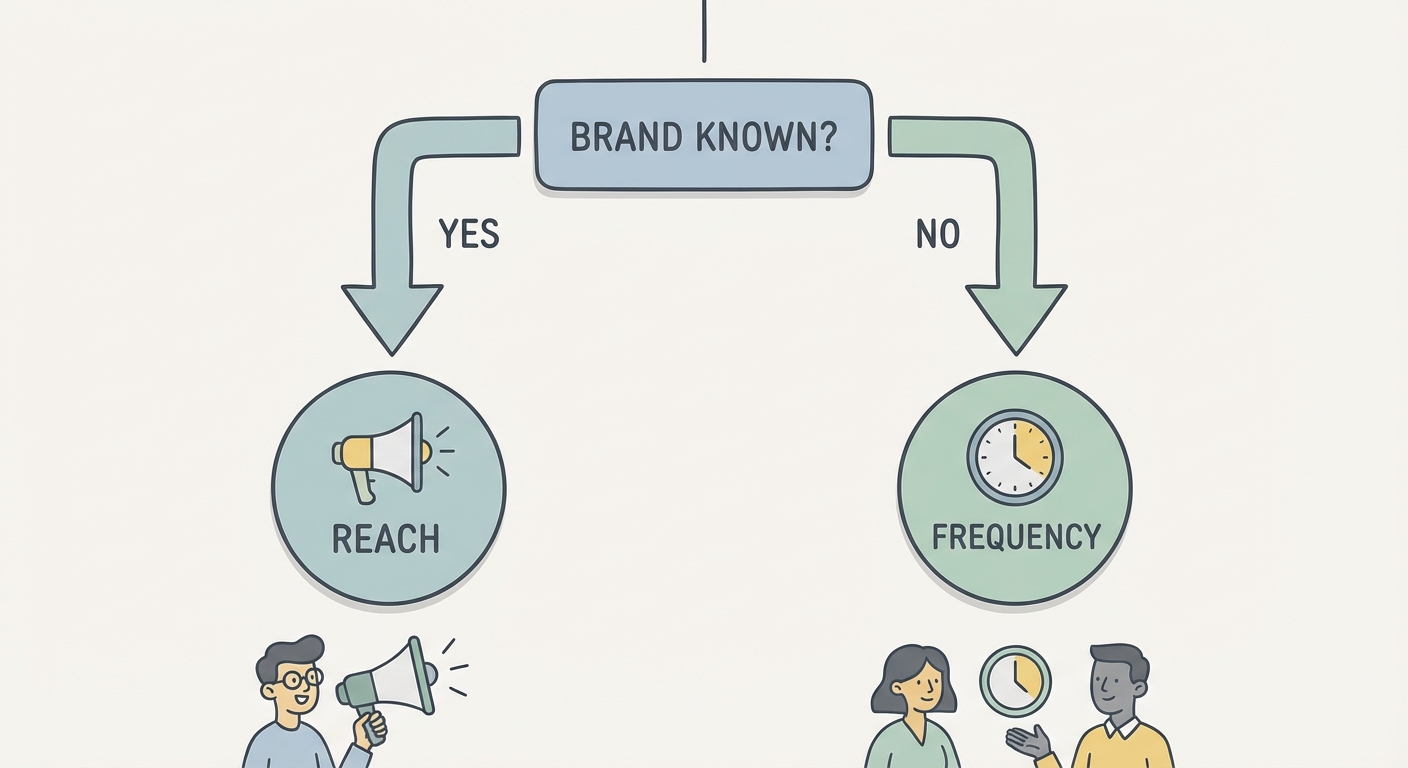
Before you spend a dime, you have to make a choice. Unless you have the budget of a small nation, you cannot maximize both Reach and Frequency.
- Reach is width. It is the number of unique individuals who see your message.
- Frequency is depth. It is the number of times those individuals see it.
Think of it like watering a garden with a hose that has low pressure. You can either mist the entire acre lightly (High Reach, Low Frequency), in which case most of the water evaporates before doing any good. Or, you can water a specific patch of soil deeply (Low Reach, High Frequency), ensuring the roots actually get what they need to grow.
Most amateur marketers are obsessed with Reach. They want "eyeballs." They want to see big vanity numbers on their dashboards. But 100,000 people seeing your ad once is usually worthless. They won't remember you. Conversely, 10,000 people seeing your ad ten times creates a market.
The strategic choice depends on your brand's maturity:
- Prioritize Reach if you are Coca-Cola or Apple. Everyone already knows who you are; you just need to remind them you exist.
- Prioritize Frequency if you are a new startup, launching a complex product, or fighting for market share. You need to educate, persuade, and build trust from zero. You need depth.
The "Goldilocks" Frequency: How Much is Too Much?
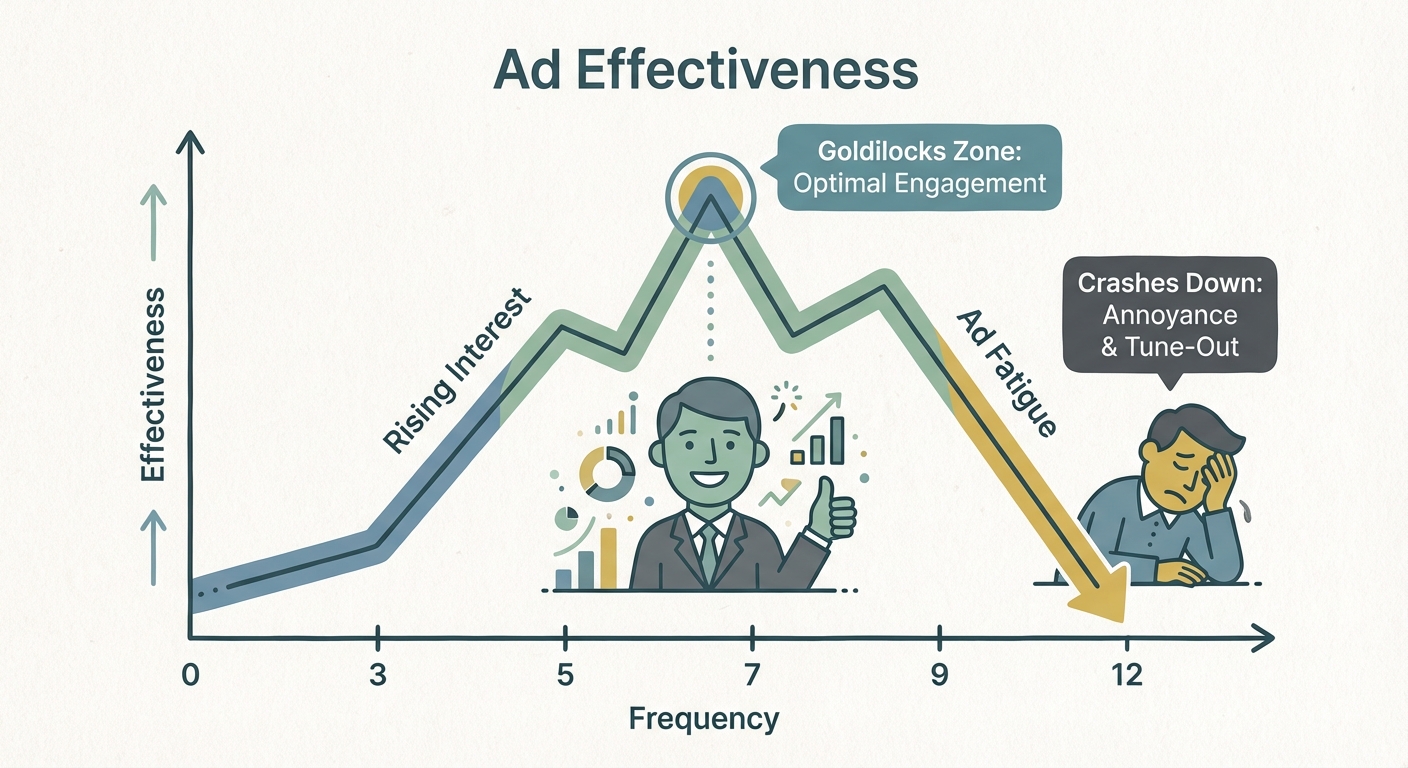
Effectiveness in advertising follows a bell curve. It's the law of diminishing returns, and it hits hard.
At the bottom of the curve (1-2 impressions), you are in the "Invisible Zone." You are wasting money because the signal isn't strong enough to break through the noise. As frequency increases, effectiveness spikes. You hit the "Sweet Spot"—where recognition kicks in, trust builds, and conversion happens.
But if you keep pushing, you go over the cliff. You enter the "Annoyance Zone."
This is where ad fatigue sets in. The user stops seeing your brand as a solution and starts seeing it as a mosquito they want to swat. Negative sentiment rises, and your Return on Ad Spend (ROAS) crashes.
So, where is the line in 2026?
According to recent Nielsen Ad Research, the benchmarks have shifted:
- Brand Awareness: The standard is now 2-4 impressions per week. This keeps the brand "top of mind" without becoming intrusive.
- Direct Response: You can push harder here, sometimes up to 5-6 times a week, but the risk of churn is higher. If they haven't clicked after the sixth time, they probably aren't going to.
Crucially, the "Annoyance Threshold" varies by platform:
- TikTok: The tolerance here is incredibly low. If a user sees the same creative more than 1-2 times, they will swipe past it instantly. The algorithm punishes this fatigue ruthlessly.
- Meta (Instagram/Facebook): Tolerance is medium. Because the feed is passive, you can get away with 4-5 impressions per week, especially if you are using Stories or Reels that feel native.
- OOH (Out-of-Home): This is the exception. Billboards and transit ads allow for massive frequency without the "creepiness" factor. Seeing a billboard every morning on your commute reinforces the brand without feeling like an invasion of privacy. It is "unskippable" but respectful.
How to Repeat Without "Fatigue": The Art of Sequencing
Here is the secret that separates the pros from the spammers: Repetition does not mean showing the exact same creative.
When we say "frequency of 10," we mean the user interacts with your brand message 10 times. If you show the exact same static banner 10 times, you are annoying. If you tell a story across 10 different touchpoints, you are interesting.
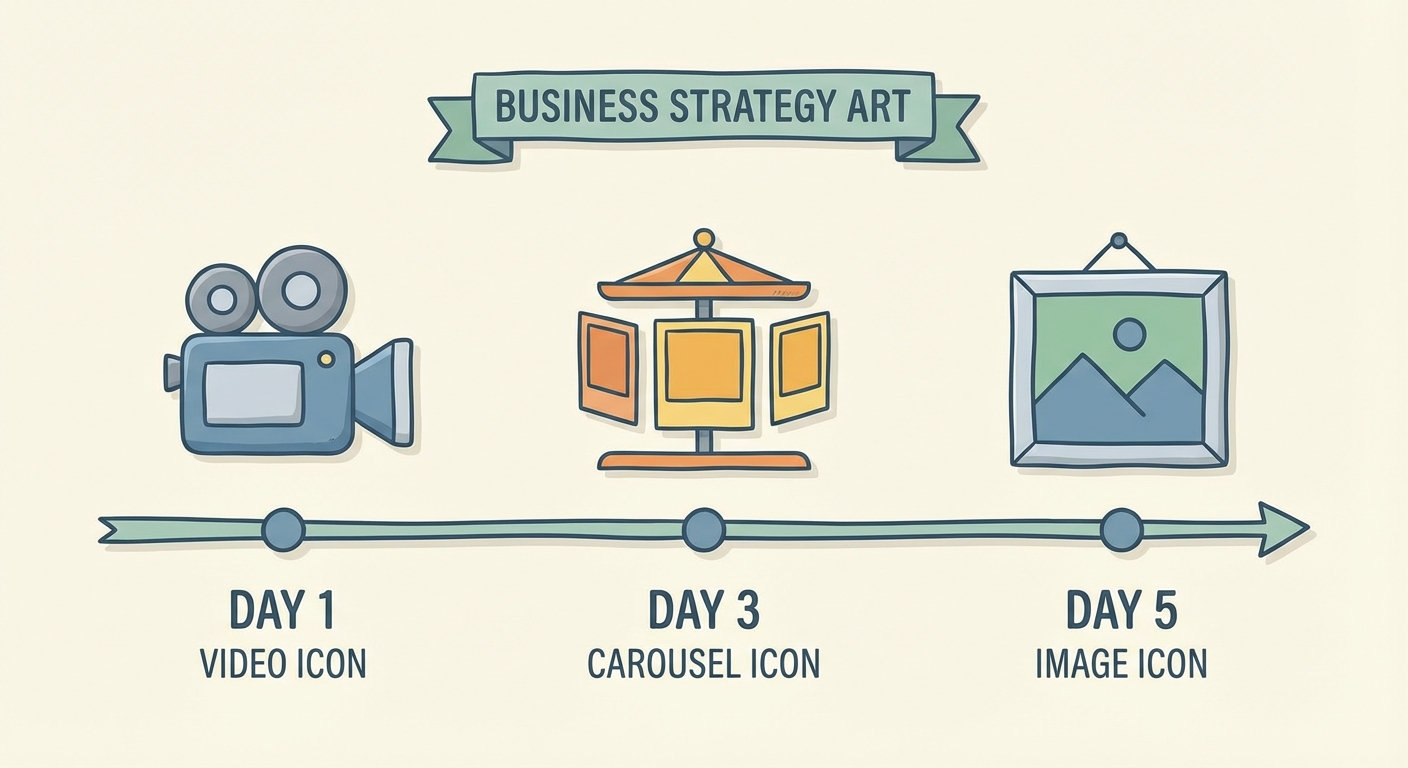
This is called Sequential Storytelling. You rotate your creatives to hit your frequency cap while keeping the experience fresh. You guide the user through a narrative arc.
- Ad A (The Hook): A short video highlighting the Problem. (e.g., "Tired of back pain?")
- Ad B (The Solution): A carousel ad explaining How Your Product Works. (e.g., "Our ergonomic chair aligns your spine.")
- Ad C (The Proof): A static image featuring a Testimonial or Review. (e.g., "5 stars from 10,000 customers.")
By the time the user sees Ad C, they have theoretically been "exposed" to your brand three times. But because the format and the angle changed, their brain didn't filter it out as "old noise." They engaged with it as new information that reinforced a familiar idea.
You can also use Creative Rotation—keeping the hook and copy identical but changing the visual background or the actor. This tricks the brain into paying attention ("New stimulus!") while delivering the same payload ("Buy this chair").
The Privacy Paradox: Managing Frequency in a Cookieless World
In the golden age of third-party cookies, we could cap frequency across the entire internet. We knew that User X saw our ad on YouTube, then on The New York Times, then on Facebook. We could say, "Stop showing ads to User X after the 5th time."
Those days are gone. With cookies crumbling and privacy regulations tightening, we are flying partially blind. You might show an ad 5 times on YouTube and 5 times on Instagram. To the platforms, that looks like perfect frequency. To the user, that is 10 times—way too much.
The solution in 2026 is to rely on Walled Garden Data. You cannot control the open web as easily, so you must control the ecosystems.
- Consolidate Spend: Instead of spraying budget across 15 different ad networks, focus on 2 or 3 major players (e.g., Google, Meta, Amazon). These platforms have robust internal frequency capping tools.
- Campaign-Level Caps: Ensure you are setting frequency caps at the campaign level, not the ad set level. If you have 5 ad sets targeting the same audience, and each has a cap of 3, a user could get hit 15 times.
- Utilize Clean Rooms: For enterprise brands, data clean rooms allow you to match first-party data with publisher data to manage frequency without violating privacy.
For a deeper dive on the technical setup, check out this Frequency Capping Guide which details how to implement these limits to prevent wasted spend.
Beyond Ads: The Role of Consistency in Organic Content
Repetition isn't exclusive to paid media. In fact, organic repetition is often more powerful because it feels earned, not forced.
Your blog posts, newsletters, and social updates build the same "Mere Exposure" trust. If a user sees your logo in their inbox every Tuesday at 9 AM, that is a frequency touchpoint. It builds a rhythm of authority. When they finally need your service, they won't search for a stranger; they will go to the source that has been consistently showing up for months.
This is why a sporadic content strategy fails. Posting three blogs in January and then silence until April destroys your "brand salience." You need a consistent heartbeat. For a comprehensive look at how rhythm builds trust, read about Content Strategy.
The challenge, of course, is volume. Maintaining high frequency in organic content is exhausting. Writing 4 high-quality articles a week to match your paid ad frequency is a heavy lift for a human team. This is where tools that help you scale become essential. Leveraging AI Blog Writing allows you to maintain that necessary drumbeat of content, ensuring your organic frequency matches your paid ambition without burning out your creative team.
FAQ: Common Questions on Ad Frequency
1. What is the optimal ad frequency for Facebook in 2026? Data suggests that for general brand awareness, 2-4 impressions per week is the sweet spot. If you are running a retargeting campaign for a hot lead, you can push this higher, but only if you are using sequential storytelling to vary the creative.
2. Does the "Rule of 7" still apply today? The principle applies, but the number is outdated. Due to fragmented attention and the sheer volume of content users consume daily, it often takes 10+ touchpoints to achieve the same level of recognition that 7 provided during the TV era.
3. How does frequency capping improve ROI? It stops you from lighting money on fire. Every impression served to a user who is already annoyed is a wasted dollar. By capping frequency, you force the algorithm to take that budget and find new users who haven't seen your ad yet, effectively lowering your CPA (Cost Per Acquisition).
4. What acts as "good" repetition vs. "bad" repetition? Bad repetition is the exact same banner stalking you across the internet. Good repetition is a brand narrative unfolding across different formats—a video on Monday, a static image on Wednesday, and a newsletter on Friday. It feels like a conversation, not a lecture.
Conclusion
Repetition is the bridge between "Unknown" and "Trusted." It is the mechanism that turns a stranger into a customer. But in 2026, the goal isn't to be the loudest brand in the room; it is to be the most consistently present.
You must respect the "Goldilocks" zone. You must respect the user's privacy. And most importantly, you must respect their intelligence by rotating your creatives and telling a story rather than shouting a slogan.
Audit your current campaigns today. Look at your frequency column. Are you under-investing (1-1.5 frequency), rendering yourself invisible? Or are you over-investing (10+ frequency), paying to annoy your future customers? Find your balance, and you will find your ROI.



